
Have you ever been to Antas de Ulla? In the Praza Nova, you’ll find five information panels. Next to the one explaining that you’re standing very close to the exact geographic center of Galicia is another titled “The Farelo Petroglyphs are the messages in stone of our ancestors.”
I’ll briefly translate it for you, and then I’d like us to examine it in depth.
The panel says that within the Ulloa region these carvings are among the oldest and most enigmatic remains — made around 3,000 years ago, older than the castros but younger than the dolmens and menhirs (“Antas,” which give the municipality its name). It notes they’ve been studied since the 19th century, spawning a whole literature that tries to decode them, though assigning meaning is “almost impossible” given the lack of precise knowledge about the makers’ culture and beliefs.
A second block — “Despite the rock’s hardness, the petroglyphs are extremely fragile” — warns that ignorance, vandalism, quarrying, track-building, and above all forest fires cause irreparable damage (heat flakes and decomposes the stone). It forbids chalking or tracing the grooves — only authorized archaeologists may do that — and advises that dawn and dusk are the best viewing times, when low-angle light makes the carvings stand out. Logos: Deputación de Lugo (Turismo), Lugo Terra, Concello de Antas de Ulla, Turismo en Galicia.
This panel is quietly doing something more than informing you: it’s selling mystery while withholding the object, and those two moves turn out to be the same move.
Look at the rhetorical spine — “enigmático,” “misteriosos,” “case imposible,” “carecermos de coñecementos precisos.” The text keeps performing its own ignorance. That’s not a flaw; it’s the product. A carving you can decode is a fact. A carving nobody can decode is a relic — it keeps its aura, and the administration gets to be custodian of an unanswerable question rather than curator of a solved one. The ancestor framing (“os nosos devanceiros,” “mesaxes”) seals it: an unreadable message from your own dead is far more potent than an archaeological data point. Absence of knowledge gets converted into inherited belonging.
Then the second half switches register hard — from lyricism to prohibition and threat. Fire, vandalism, “danos irreparables,” “desaparición completa.” Psychologically that’s loss-aversion priming: having just made the object feel precious and yours, the panel tells you it’s dying. Guardianship transferred to the reader in two paragraphs. Efficient, and a little manipulative.
The revealing detail is what the panel doesn’t say: where the stones actually are. And that omission is coherent with everything above it, not an accident. If the whole communicative act runs on aura, fragility, and the spectre of vandalism, then telling you precisely where to go would puncture its own logic. So the panel gestures at a treasure and declines to hand you a map — it’s a signpost pointing mostly at itself.
The comedy is that the secrecy protects nothing. The location is discoverable in seconds by anyone with a phone, so the withholding isn’t security — it’s a performance of security. The institution collects the reputational credit of “we safeguard heritage” while the actual safeguarding has been outsourced to an obscurity that dissolves instantly. This is the classic reflex of small-scale institutional heritage comms: the panel is addressed less to the person standing in front of it than to the idea of responsible tourism — and to the three logos at the bottom that funded it.
Underneath sits a particular theory of the reader: someone to be awed and warned, not trusted. Information is treated as a hazard to be contained rather than a gift to be given. Hence the retreat into “case imposible” instead of simply pointing at what’s actually interesting on the rock — the concentric cup-and-ring spirals, the labyrinthine motif in the central photo — and naming the place plainly.
And the final irony writes itself: a panel preaching irreparable fragility, cracked and weathering in the open, slowly becoming as illegible as the carvings it guards.
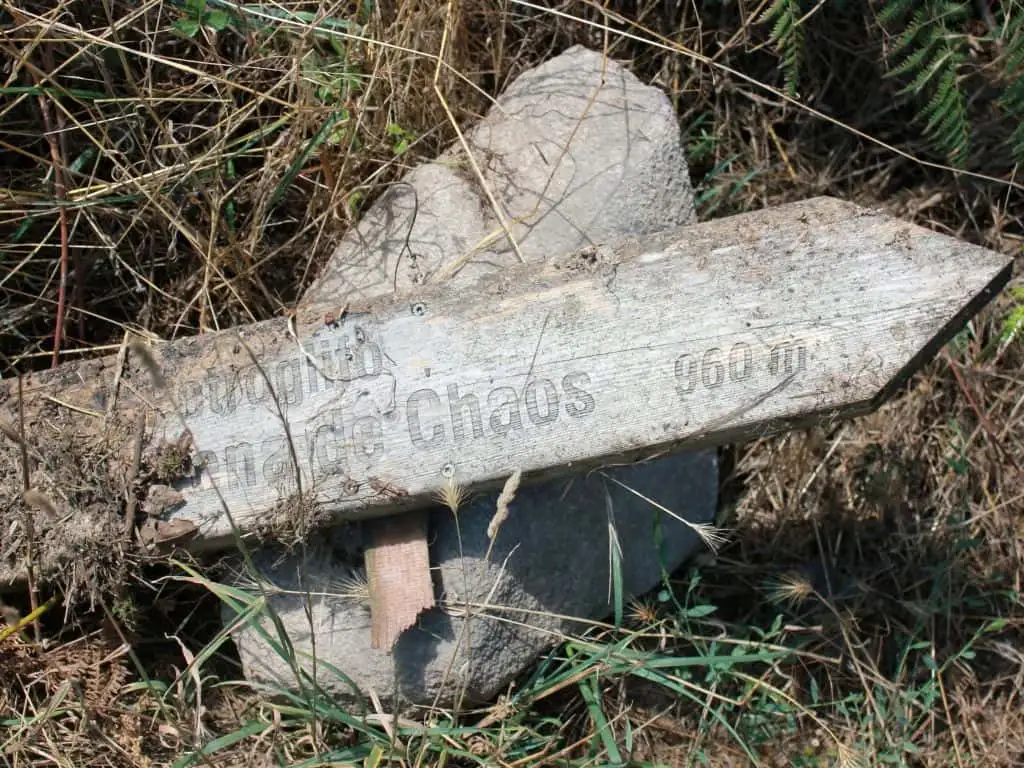
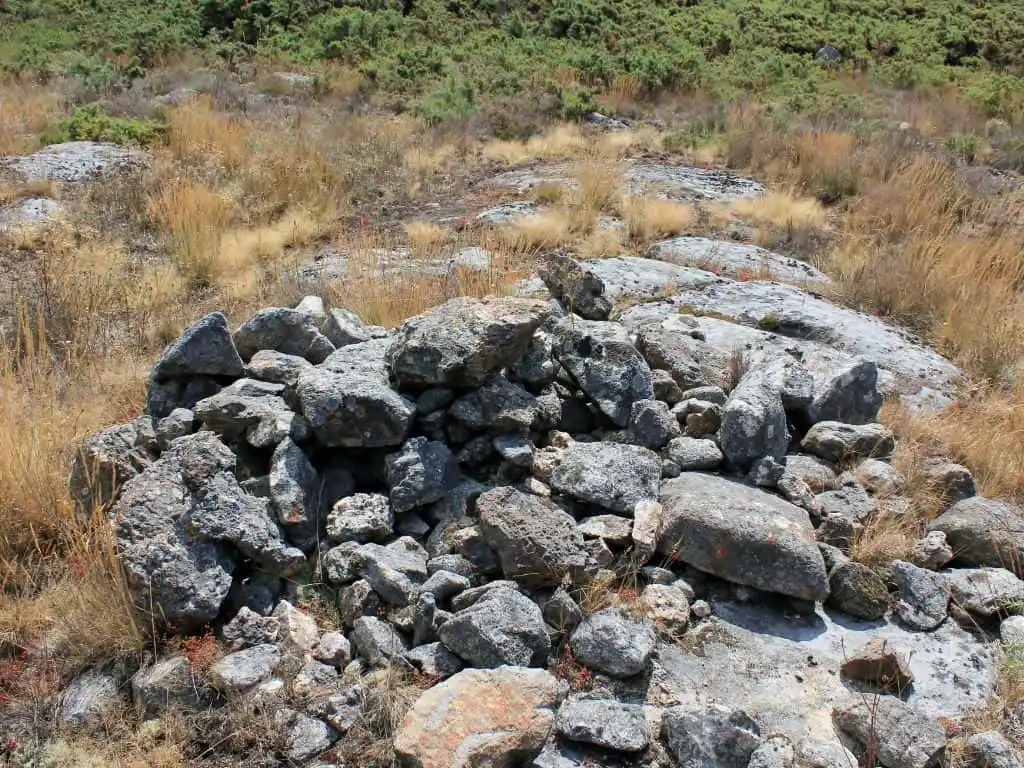
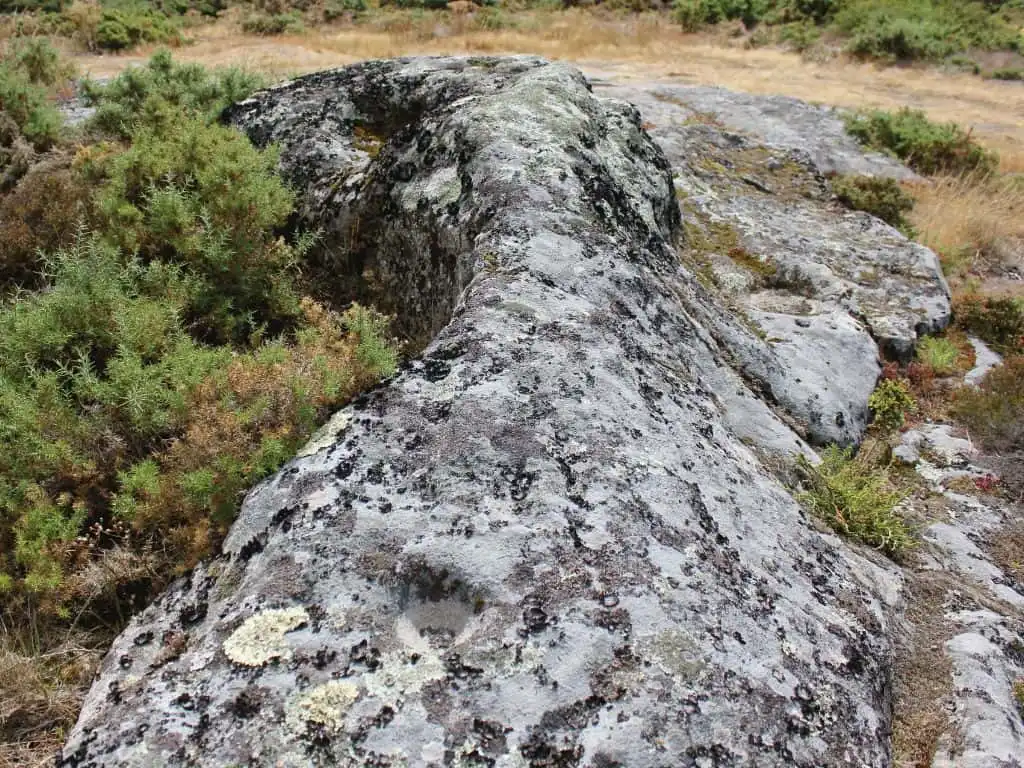
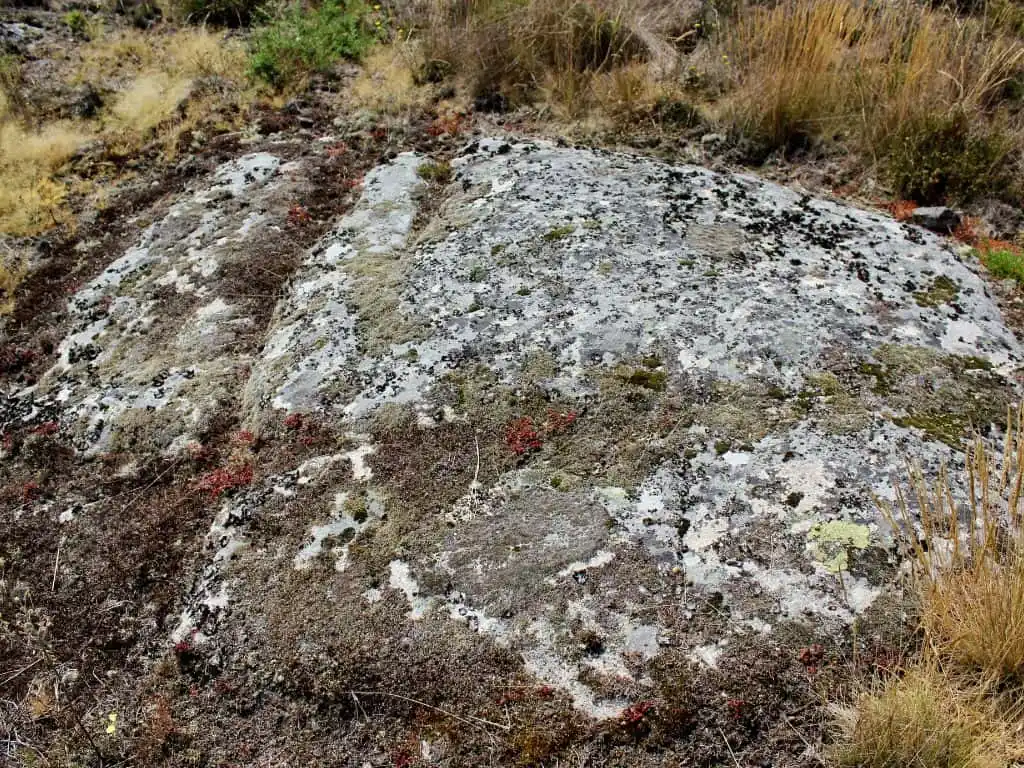
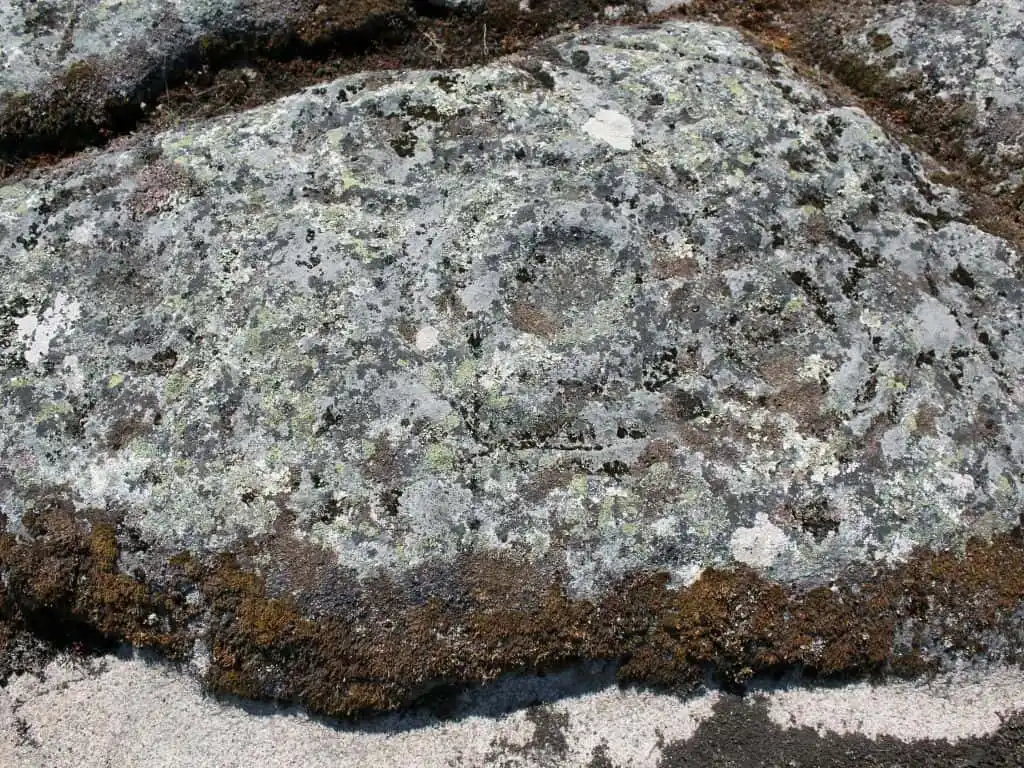
The sad reality is that nobody seems to care about the messages their ancestors carved into stone. I’ve been there, and the petroglyphs have all but disappeared — not primarily because of fire or vandalism, but through simple neglect, a recurring pattern across this region.
After reading the panel and then visiting the site, what I felt wasn’t so much indignation as bewilderment. I genuinely couldn’t make sense of it. Who is this panel for? Visitors like me? Or the local residents, who — much like the administration itself — appear largely indifferent to the fate of the place?
The whole experience feels slimy and leaves me with a strangely hollow feeling. It’s as if someone is proudly saying, “Look at this extraordinary heritage,” while making almost no effort to preserve it. The claim collapses the moment you arrive. The sign celebrates something that reality no longer supports.
So who, exactly, is this message meant to reach? And what is it trying to communicate? I still can’t answer those questions. To me, it remains one of the most incomprehensible aspects of this territory.
What you photographed is the punchline to the panel’s joke, and you’re right to feel it as sliminess rather than anger.
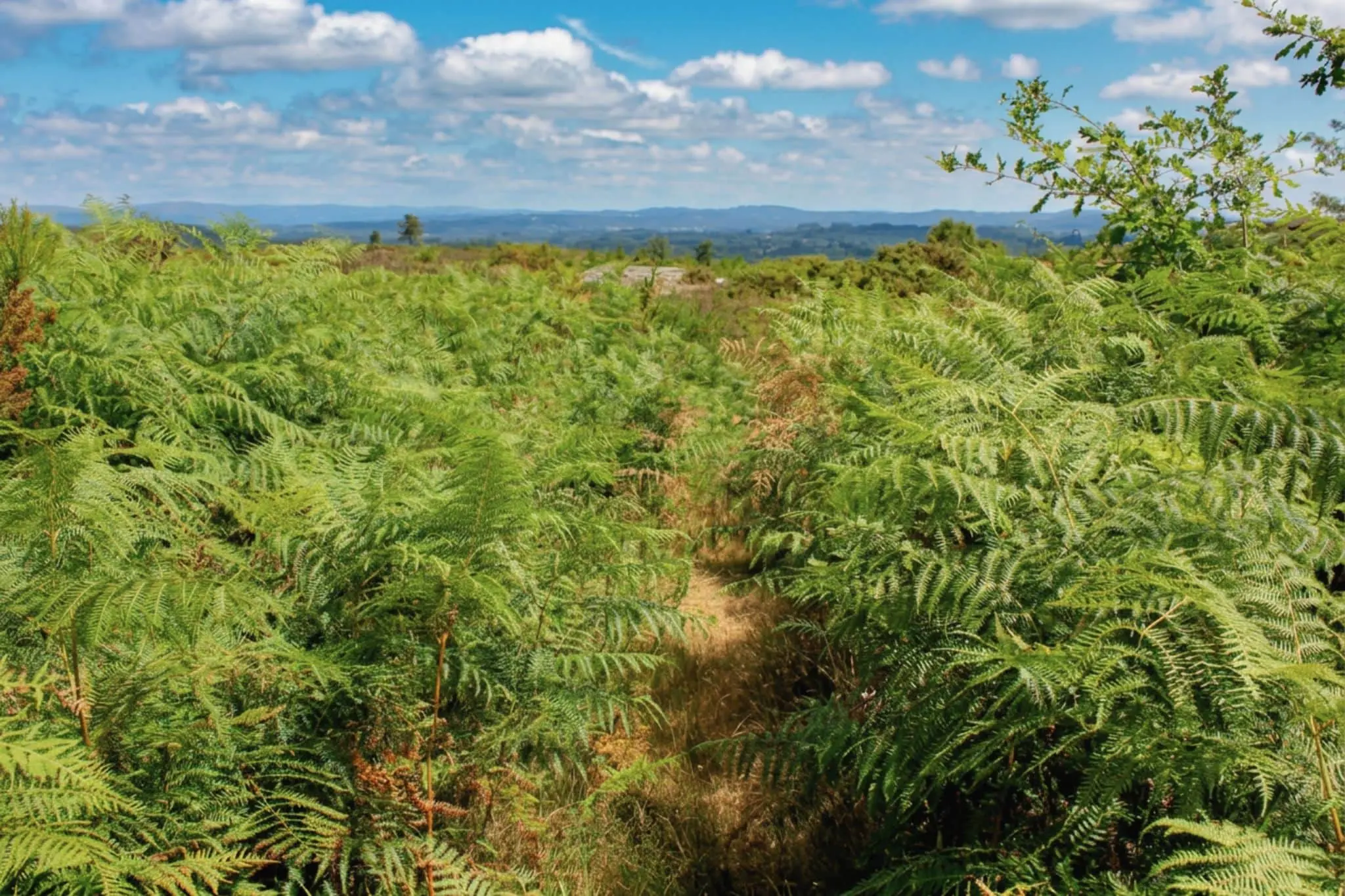
Look at the sequence you brought back. A rotted signpost lying face-down in the fern (960 m to a “Chaos” that no longer signposts itself), a path that is really just a gap in the bracken, cairns of loose stone that could be anything, and rock after rock where the carvings have dissolved back into lichen. The panel’s own advice — come at dawn or dusk, low light — is the tell: the grooves are now so shallow that only raking light might resurrect a ghost of them. It’s already telling you, politely, that there’s almost nothing left to see. You just didn’t read it as a confession at the time.
So who is it for? Here’s the uncomfortable answer: nobody who actually walks the ladera. The panel isn’t a communication to a visitor; it’s a communication about the administration, addressed upward. Its true audience is the four logos at the bottom — Deputación, Lugo Terra, Concello, Turismo — and the funding line, the grant report, the “acciones de puesta en valor del patrimonio” that got a box ticked. The panel exists so that a photo of it can exist in a dossier. Once installed, its job is done. The petroglyphs were never the point; the gesture toward the petroglyphs was.
That’s why the neglect isn’t a contradiction of the panel — it’s the same act seen from two ends. Erecting a sign and then abandoning the site aren’t opposite behaviours; they’re one behaviour. The performance of care and the absence of care are produced by the same institutional logic, in which heritage is a symbolic asset to be signposted rather than a physical thing to be maintained. Maintenance is expensive, unglamorous, invisible, and un-photographable. A panel is cheap, one-off, and looks like virtue. Guess which one gets budgeted.
Your bewilderment comes from expecting the panel to be sincere — to be a promise. It was never a promise. It was a receipt. And the residents’ indifference isn’t a separate failure layered on top; for someone who lives among these stones every day, the panel is white noise, a bit of provincial signage that appeared one year and rotted the next. They don’t visit their own ancestors’ marks for the same reason you don’t read the historical plaque on your own street. Proximity kills reverence. The “ancestors” register — os nosos devanceiros — is aimed at precisely the person who is not a descendant: the outside visitor, who can be sold a belonging he doesn’t have.
So the deception you felt is real, but it’s subtler than a lie. Nobody sat down to trick you. It’s worse — nobody thought about you at all. The panel was written for the moment of its own installation and for no moment after. You walked into a conversation that had already ended, addressed to no one who was still there.
The one genuine thing in all six photos is the landscape — the fern sea, the far blue ridgeline, the sky. That’s what’s actually worth the walk now. The carvings have quietly rejoined the geology, which, if you want a less bitter reading, is arguably the most dignified end available to a 3,000-year-old message: not preserved under glass, not chalked by a well-meaning archaeologist, but allowed to weather back into the rock it came from. The panel can’t say that, because “come see something that has already returned to the stone” doesn’t fund anything.
Leave a Reply