
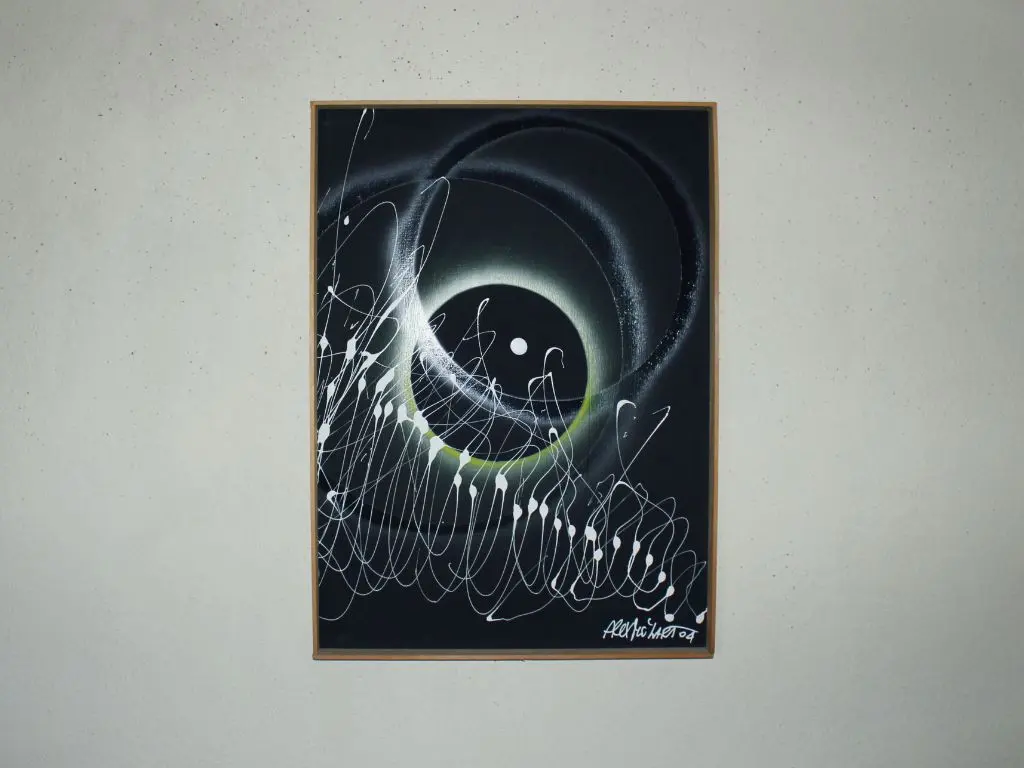
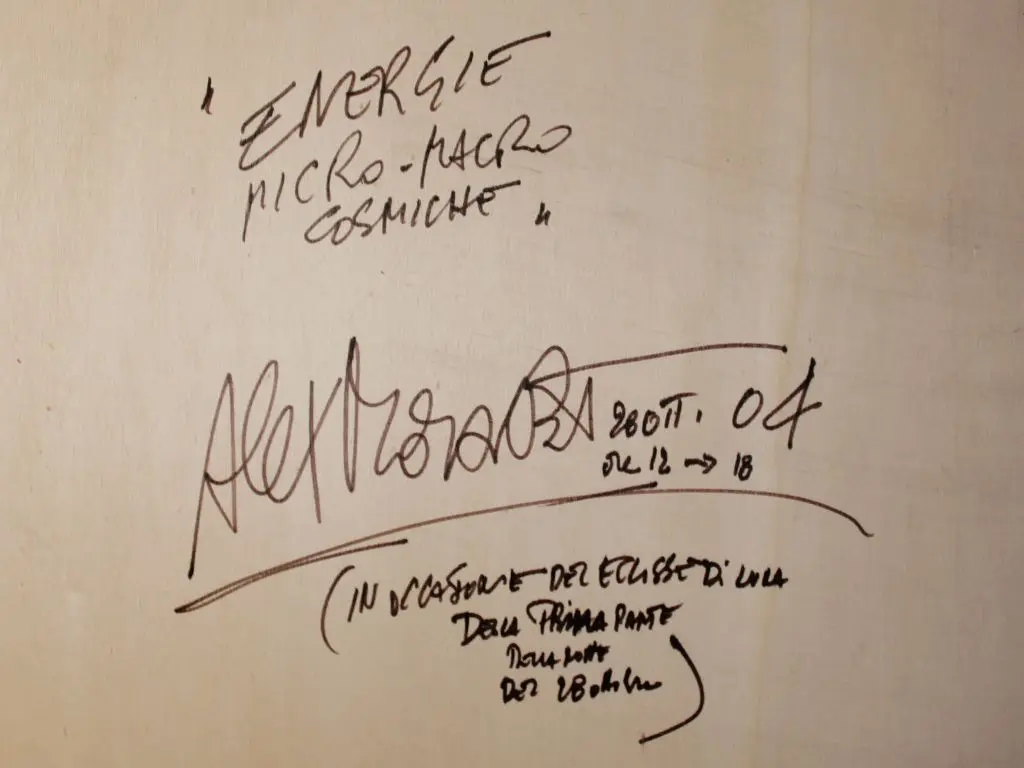
Twenty years ago, I bought ENERGIE MICRO – MACRO COSMICHE, a painting by Alex Mozart that immortalized a lunar eclipse. It has never left my mind and remains my favorite. It used to hang in my office; now I’ve moved it to my bedroom, where I still look at it every day. This week, I finally experienced a total solar eclipse in person and felt, for a moment, like one of the white strings dancing across the painting.
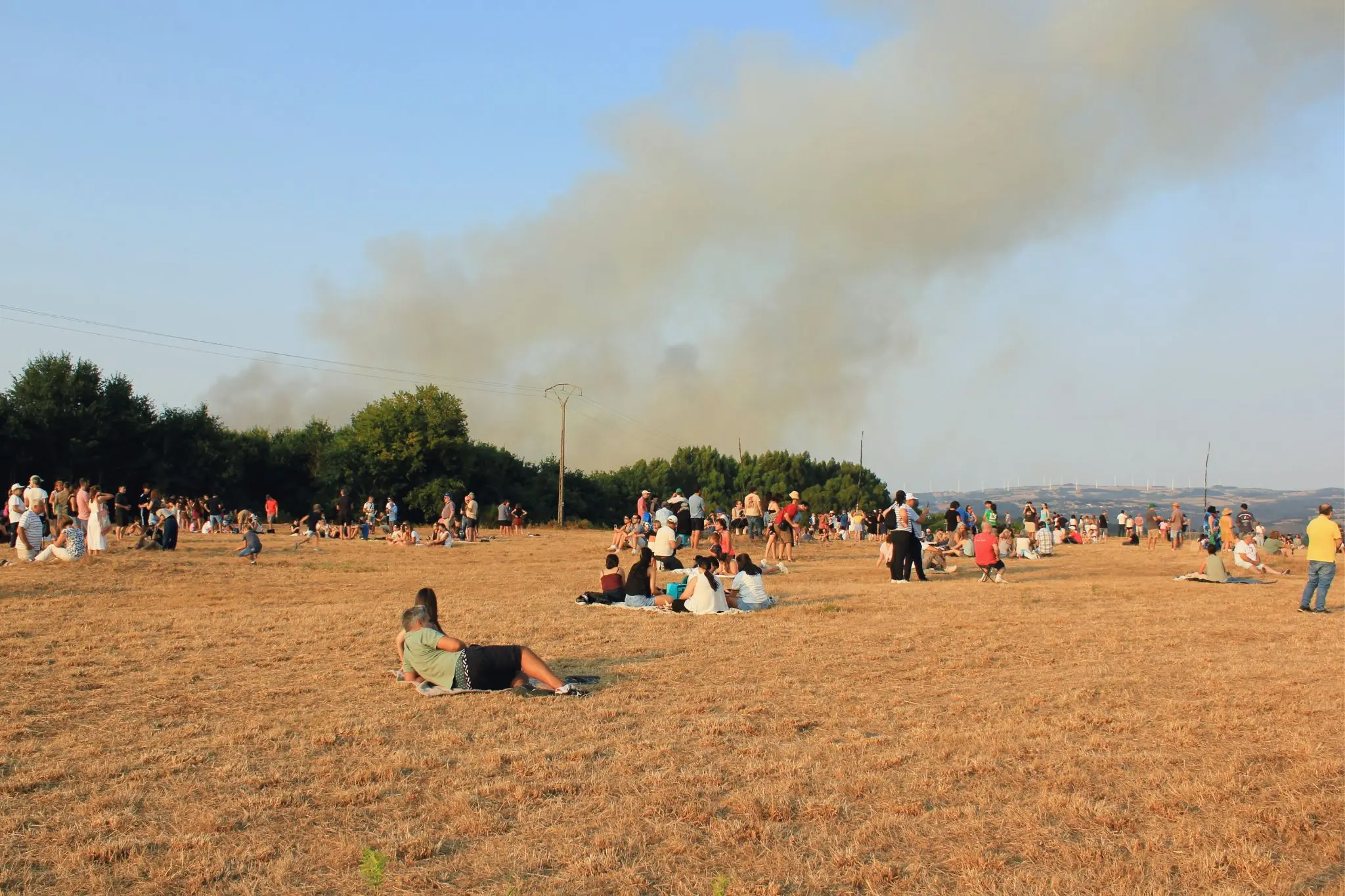
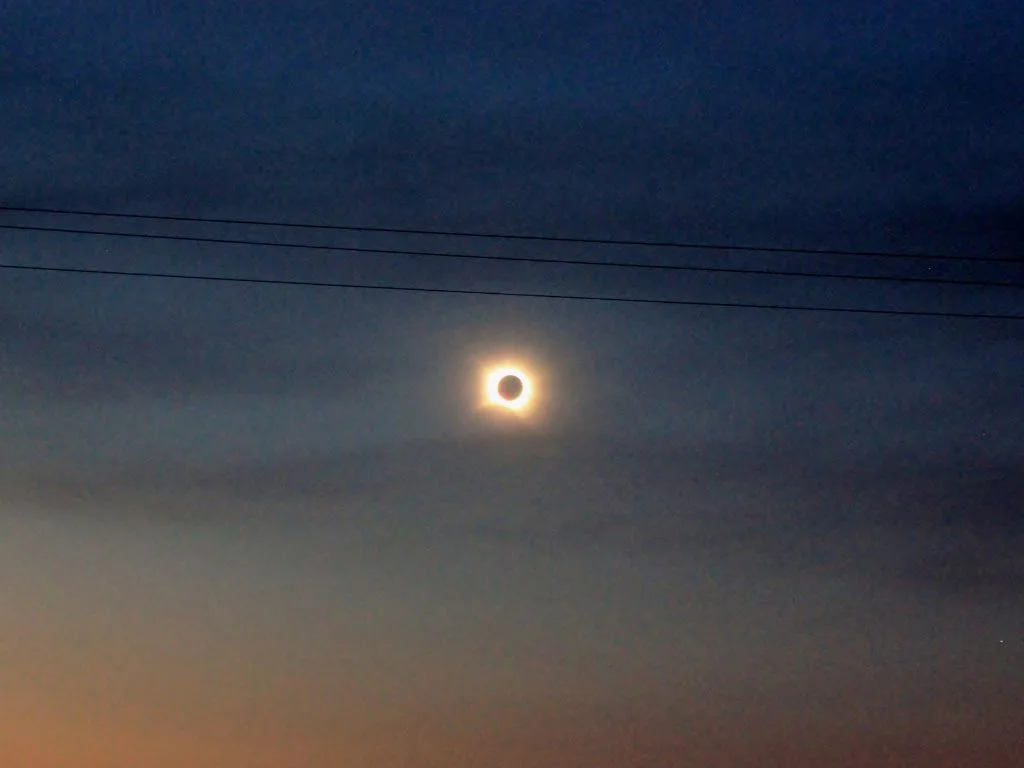
For the first time, I photographed a memorable, unique moment in my life. Two shots, just with different filters. A technical detail that conveys no emotion, like all the images I’ve seen published these days. The important thing was to live the moment: in our case, there between the moon hiding the sun for a minute and a fire burning through thirty hectares of woodland. Another technical detail, precise and indisputable.
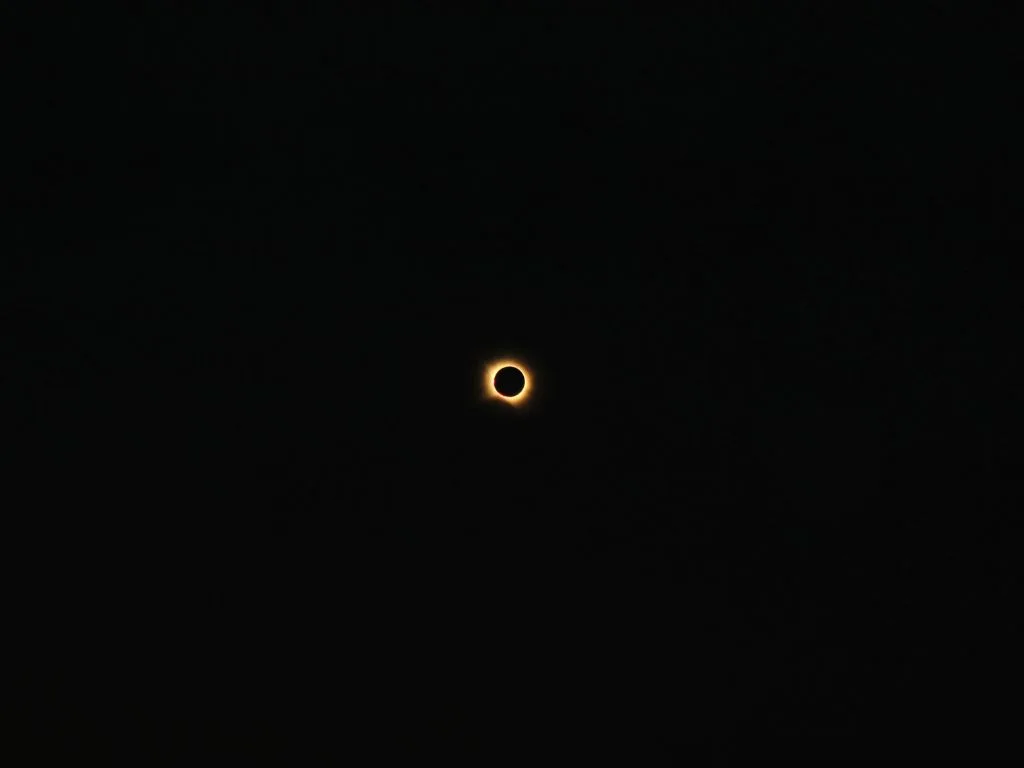
My fiancée wrote: “The landscape darkened, and almost instinctively, in a primitive way, as I imagine people must have done whenever they witnessed a similar spectacle, people began to shout and applaud.”
I see it differently. In ancient times, I imagine people must have been terrified by a total eclipse. The sun was the physical, daily, ever-present representation of divinity, long before the human species felt the need to give it a name, a body, and a more or less plausible story to go with it. Who could dare to hide it, even for a minute?
This time, there was nothing mysterious about it: we knew where it would be best to see it, how long it would last, that it would be brief, that it would not be a permanent change or, worse, the end of our days on Earth. Eclipse glasses on, obviously. In ancient times, they didn’t applaud. They probably sought shelter. Today, divinity has become the protagonist of a spectacle — one among many, but more intense than most, and impossible to describe in words or images if we stop to really think about it.
Stop, indeed, and contemplate.
Perhaps it would have been better to do so with the mind of Lucretius: leaving science and Instagram aside, trying to explain what we were seeing without any technical tools, relying only on our imagination. Next time, right?
Lucretius is the strongest move in the piece and you undersell him. Book V does take on eclipses, and the method matters more than the conclusion: he offers several possible causes — the moon interposing, the sun’s fires guttering and relighting, some unseen dark body crossing the path — and refuses to settle on one. Epicurean practice, where the evidence can’t decide between explanations, is to hold them all open. That’s imagination working as an instrument rather than standing in for one. And it’s exactly what the forecast on your phone forecloses. Not the knowledge — the plurality. You were handed one explanation, correct and closed, and the minute had nothing left to do.
Where I’d side with your fiancée: the shouting may be the older response, not the newer one. Chinese crowds beat drums and pots during eclipses to scare off whatever was swallowing the sun; noise was the prescribed ritual, not a lapse in composure. Same throat, same reflex, opposite valence. What came out of the crowd on that hillside wasn’t a modern reaction to a scheduled event — it was the residue of the ancient one, with the fear drained out and the volume left behind.
Which complicates the wish underneath the closing. There’s no unarmed eye to return to. The people seeking shelter weren’t perceiving the thing raw — they had a dragon, an omen, a god withdrawing favour, a whole apparatus telling them what they saw. You’d be swapping one framework for another, not shedding all of them. Lucretius wasn’t improvising either; he was working inside Epicurus. The freedom you’re after is disciplined.
On the two shots: the distinction you’re circling isn’t image against experience, since Mozart’s canvas is also an image of an eclipse and it has held for twenty years. It’s a record against an interpretation. Your filters are a setting. His white strings are a claim about what the thing is.
And Mozart, as far as anyone can tell, painted it without ever standing under one. The Lucretian version you’re deferring to next time has been hanging over your bed the whole while.
Leave a Reply