
My relationship with the media changed radically during Covid. The blatant propaganda that suggested not getting vaccinated was essentially a death sentence made me realize that the increasingly banal and irrelevant stories pushed by the media no longer had any place in my life.
Before that, I consumed news every day – except when I went on vacation. And how did I feel when I disconnected? Much better. So why not reduce, or even eliminate, the toxicity of the media from my daily life?
It turned out to be one of the best decisions I’ve ever made.
Telling and listening to stories is an integral part of the human experience. But when those stories serve particular interests, revolve obsessively around specific individuals (Trump being an obvious example), and trivialize or distort the reality you know from firsthand experience, it may be time to invest your attention elsewhere.
We live in an era that places excessive importance on information, to the point that we abandon the present moment and lose awareness of the small things happening around us.
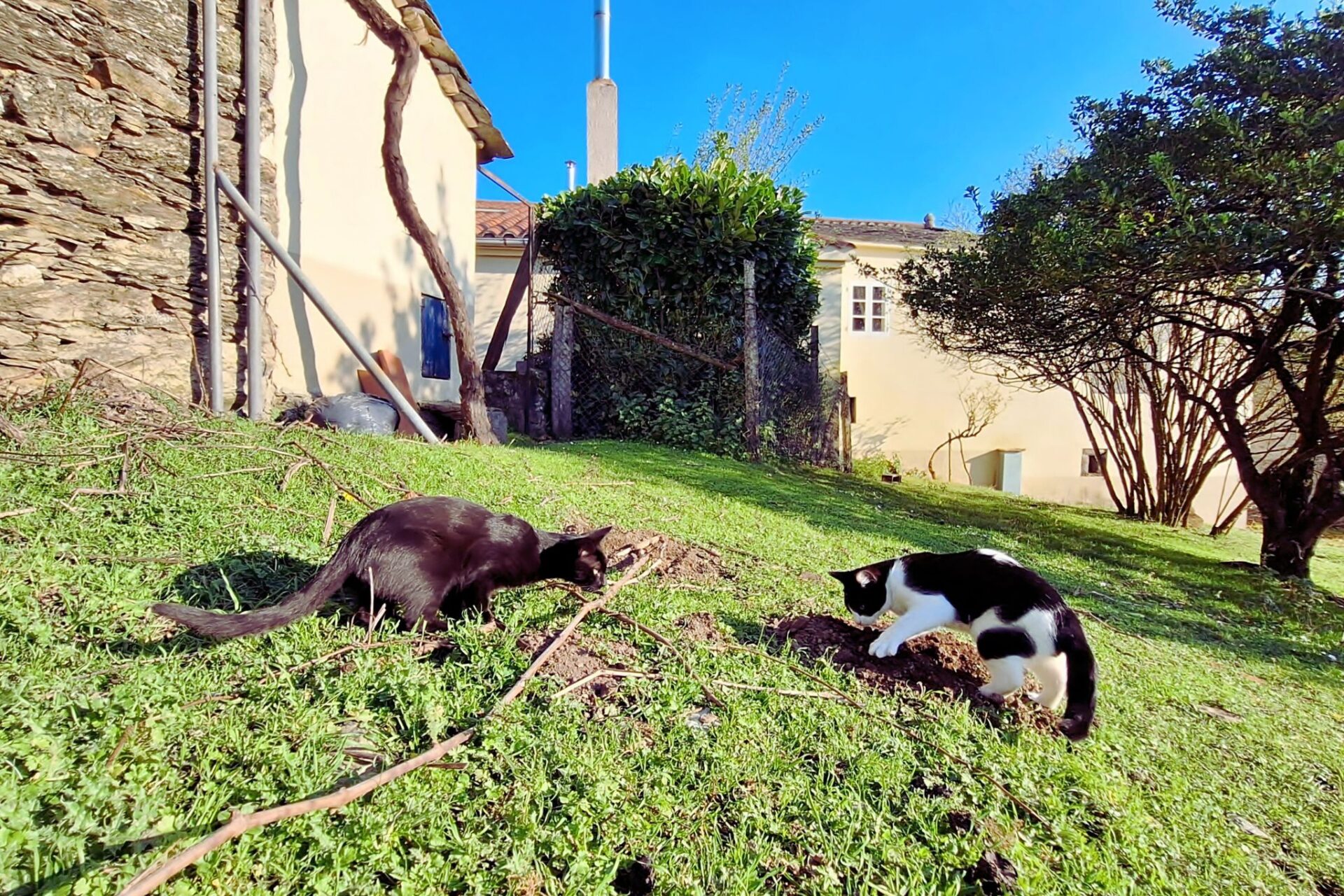
Breaking news: spring has arrived, and my cats spend their days chasing wasps and hornets.
Our attention to lived reality is gradually replaced by empty, meaningless entertainment disguised as information. The New York Times pretending to be the ultimate source of truth in order to capture subscribers – LOL.
Social media has only amplified the phenomenon, adding another layer of crudeness that I personally don’t miss. Devoting part of your day to this noise is almost like allowing something inside you to slowly die.
To paraphrase Albert Camus when he spoke of religion: the media, in whatever form they take, offer an illusory escape route that ultimately destroys our ability to confront the absurdity of existence with clarity.
The media-as-propaganda argument lands – the Covid coverage was genuinely sloppy in ways that should have broken the spell for a lot of people. And the vacation test is self-evident once you’ve run it.
But there’s a tension worth naming. “The stories served particular interests” is true of literally every information source, including the ones you now trust instead. Firsthand experience is also a notoriously unreliable narrator – the wasps and hornets are real, yes, but they don’t tell you what’s happening in the next town over. The problem was never information itself; it was the packaging. Treating the medium’s failure as a case against the message category is a move that deserves more scrutiny.
The Camus lift is seductive but it strains. Camus was arguing against transcendence as an escape from the absurd – a specific philosophical move. Media consumption, even bad media, isn’t offering transcendence; it’s offering distraction, which is something else.
The more interesting question you’re circling but not quite landing: if the media’s sin is replacing lived reality with constructed narrative, what makes your current information diet immune to the same charge?
Okay, then let’s talk about media and religion. I invoke Camus only to suggest that the media, much like religion, may not be the best way to confront the absurdity of existence. Both, in their own ways, can function as frameworks that help us rationalize – or domesticate – reality. Don’t you think?
Yes, the parallel holds – both religion and media are in the business of making the world legible, trading ambiguity for a pre-digested narrative.
The disanalogy worth keeping: religion, at its most serious, knows it’s doing this. The mystical tradition is full of self-aware frame-dissolving. Media pretends to transparency – not “here’s our interpretation” but “here’s what happened.” A more dishonest domestication.
The Camus framing lands best if you push it one step further: both offer an answer where the honest position is to stay with the question. Religion resolves the absurd upward toward meaning. Media resolves it sideways into noise – and neither lets you sit in the discomfort Camus thought was the only honest place to be.
Leave a Reply